Yusuf Jones: The Algorithmic Abolitionist
Exploring AI and Technology Through the Lens of Black and Muslim Heritage
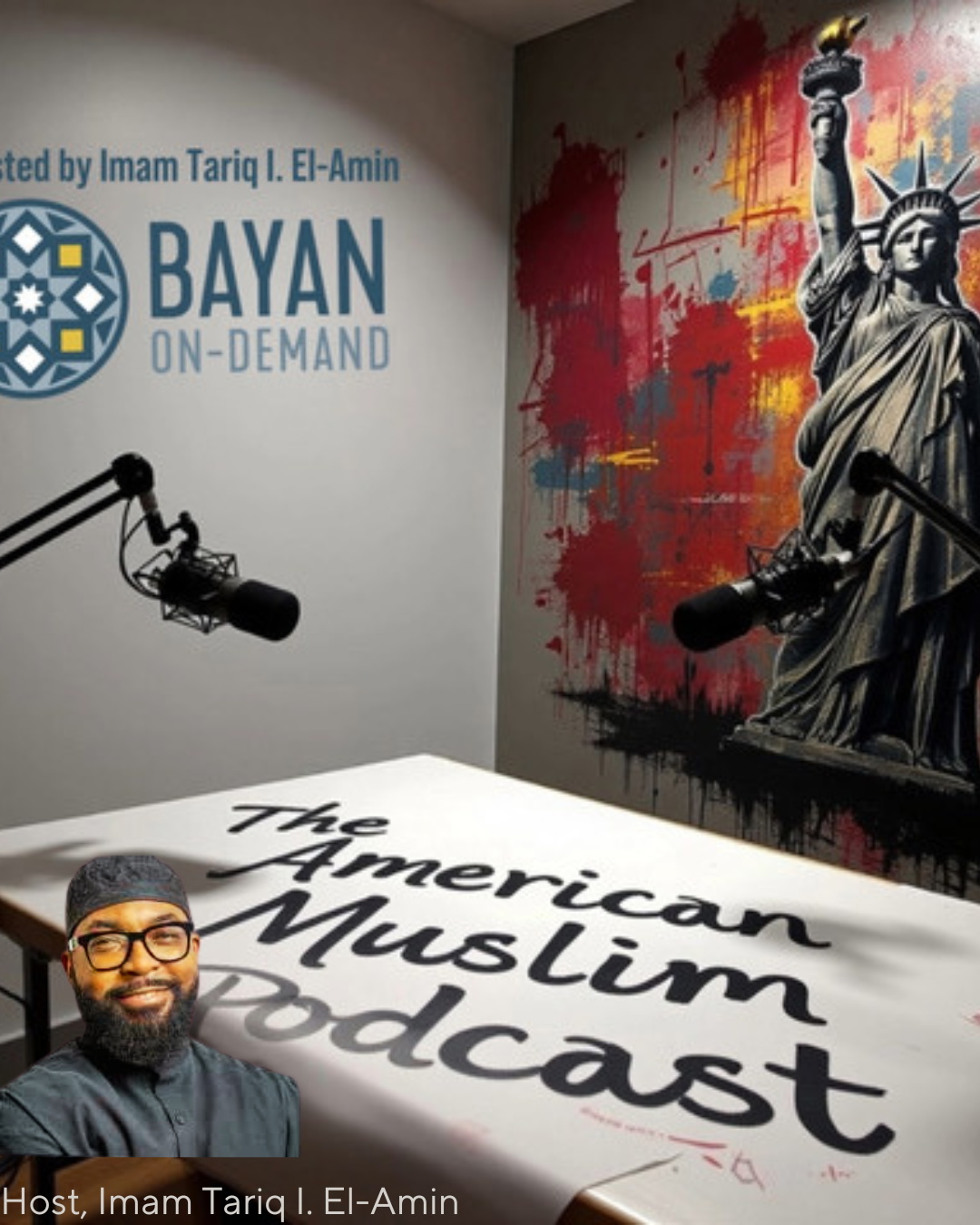
In this episode of the American Muslim Podcast, host Imam Tariq I. El-Amin welcomes Yusuf Jones, also known as the Algorithmic Abolitionist. Yusuf shares his journey of understanding and developing technology, rooted in his early exposure to computers through his father, a teacher at Kenwood Academy. They discuss the importance of recognizing Black contributions to technological advancements and how AI can be leveraged to benefit marginalized communities. Yusuf emphasizes the need to merge linguistic strengths inherent in African American communities with AI development. The conversation also touches on the spiritual dimensions of technology, the potential for AI to assist in preserving genealogical records, and the creation of private, localized AI systems to maintain data privacy. The episode encourages listeners to approach AI with intention and awareness, informing how we can integrate technological growth with cultural and historical preservation.
00:00 Introduction and Opening Thoughts
00:39 Guest Introduction: Yusuf Jones
02:18 Early Exposure to Technology
04:10 The Importance of Technological Adoption
06:39 AI and Community Involvement
09:54 Challenges and Opportunities in AI
16:15 Language and AI: A Unique Intersection
22:58 Spiritual Dimensions of AI
29:21 Future Prospects and Responsibilities
34:37 Virtual Reality Mishaps
34:50 Encouragement and Discouragement
35:29 AI and Islamic Education
36:16 Personal Journey and Disability Advocacy
36:53 Empowering the Disabled Community
38:59 The Importance of Data Control
39:31 Steps Towards Independence
40:44 Open Source AI and Genealogy Projects
43:04 Family History and Technology
45:42 The Power of Technology in Preserving History
58:30 Concluding Thoughts and Future Vision
Image: Tariq I. El-Amin
Music: ‘Boss’ — written and produced by Tariq I. El-Amin
© LifeStar Development LLC. All rights reserved.
Access the full playlist at https://youtube.com/playlist?list=PLpA8DYTTVbDPucKeHkHFg6iRfzuFhlgEL&si=nXYoBDCRP6RYD-f-
The Algorithmic Abolitionist on Substack
Transcript
Yusuf Jones
[:[00:00:48] Yusuf : He is a writer, a creator of human-centered AI models, educational tools, and the T-N-A-T-N-C frameworks. Both of those are trademarked. He explores how power and injustice are enforced [00:01:00] through ai. He's the founder of the the Jale Institute. I think you're gonna find a lot of value in what you hear today.
[:[00:01:28] Yusuf Jones: I'm
[:[00:01:30] Yusuf Jones: where we need to go. But you know, we, we always start with time.
[:[00:02:01] Yusuf Jones: Um, the basic paradigm is that, you know, for a long time, our community, and I'd say black people, black Muslims, even urban communities, right? Our interaction with technology has always been exponential. You know, um, it had to do with. I, I remember my first exposure to computer code wasn't until high school, you know, um, my dad taught at, uh, Kenwood Academy, and he was actually the first person to expose me to technology because he taught drafting.
[:[00:02:51] Yusuf Jones: So he bought three Macintosh computers. He brought them home, he gave me the manual, and we spent a month putting 'em together and learning [00:03:00] about them so that he could start what would end up being the first computer aided drafting program in a Chicago high school period. Um, and that began my understanding about how important it was to keep track of how technology is adopted, right?
[:[00:03:36] Yusuf Jones: The other faculty didn't get, they wouldn't give him the money. He bought those computers that were about $200 a piece out of his own money way back then, because he was committed. He wanted his kids to have it. He wanted us not just his own children, every child in that high school in his class to have a leg up.
[:[00:04:21] Yusuf Jones: Um, but later on I realized I started to reflect on some of those lessons and everything that I was pursuing. I saw that there was a technological component and I saw other people who were in my high school and when I went to college, who found themselves in a new world of rapidly evolving technology without the skills, you know, um, they didn't have that information, and I saw that it was rampant.
[:[00:05:11] Yusuf Jones: And then the principals, you know, they wanted my dad to come back. He said, no, it's too late now. I'm retired now. Um, but in my college career I began to understand that and as I became an adult, I decided to make a pivot. I, the first technology I learned was for train, a very old programming language. As I got older, I learned, I became a, an Oracle database specialist that had to do with databases, um, SQL databases, all sorts of things.
[:[00:06:02] Yusuf Jones: His name was Ari Cook. He had a program called ZIP Code, and he, he was determined that I was gonna finish that program. He was determined. That all the students, old, young, whatever, all across, we had students as old as 70, as young as 16 in that program, and they all made it. And that program continues to this day.
[:[00:07:07] Yusuf Jones: That was all incremental. It was a very slow moving type of thing, right? We didn't have computer pro classes in a lot of our high schools growing up. And even when I became adult and went back, they were still way behind. Um, and so I decided I was going to try to pursue that, um, professionally. Um, and, and that led to eventually me becoming aware of and being involved with a guy, um, artificial intelligence, some of the earlier iterations of artificial intelligence and understanding, um, that the orientation that my father took was difficult for most people to see, but I knew it was spiritual.
[:[00:08:11] Yusuf Jones: That's the only way we're going to make it. Right. Um, you have to give back. 'cause being my parent, my, both my parents were educators, so I grew up with that. Um, and when I began to learn about AI maybe about 10 years ago, or 11 years ago, very early, I also was involved in a lot of discussions and I was in a lot of rooms where we weren't mentioned.
[:[00:08:45] Yusuf : stop you on that point right there. Yeah. And that does seem to be the typical or the expected engagement, not just the black folk, but really the American, uh.[00:09:00]
[:[00:09:24] Yusuf : Benefits from their consumption. Not everybody. Yeah. But not everybody is aware that black folk had a, a major hand and developing this technology, these technologies that we use. So from a
[:[00:09:43] Yusuf : It was not wide spread. It
[:[00:09:45] Yusuf : but I mention from a Yeah, my mentor and, and, and the, the question I wanna put to you, uh, to, to, to hear your expound a bit on this is.
[:[00:10:17] Yusuf : Yes,
[:[00:10:41] Yusuf Jones: I may mention him several times. He was originally at 3M at the forefront of the invention of CD ROMs. I mean, this man is living, he's a living legend. Um, many of the developers of early technology, like cell phones, many of the inventions that we, that [00:11:00] started out even in the electric field, the automation field later gave the foundation for research into things that would end up being very computer based and digital based.
[:[00:11:32] Yusuf Jones: You're not Eli Whitney, George Washington Carver. That's a re The reason my paradigm is, is greatly based on the example of George Washington Carver is because even though he was given, I gave him genius. He gave him insight. He, he is the p. Of the submitted inventor, right? He didn't look at the peanut and say, I'm a genius.
[:[00:12:24] Yusuf Jones: Right. Um, but my father made sure that I knew that because they, that gives, even though we were the, the larger culture, right, wanted us as consumers. There were always innovators, always free thinkers, always people. And in our community who knew. That it, the genius that Allah had given them had to be put into the service of our people.
[:[00:13:13] Yusuf Jones: Happened because very intentionally, the educational system did not allow widespread adoption of these types of innovative, uh, initiatives, right? They did. They wanted consumers. You know, the larger history of America is very capitalist driven. It's about consumers. Everybody can't be an inventor because then nobody is buying it.
[:[00:13:51] Yusuf Jones: Can you find your way home? Oh, so how well it's integrated and that it is always a tool, [00:14:00] right? George Washington's brain is mind is genius of all of these inventors that we have in our community. Were always tools to them, tools to benefit. It was, it was always unselfish and it was always with that very, um, very focused intention, right?
[:[00:14:37] Yusuf Jones: I'm gonna break it down because your injunction and my injunction is the same as Malcolm's. Make it plain. I wanna make it plain, I wanna make it simple. You know, the brothers would howl from the audience to Malcolm when it was time for him to come on and time for him to introduce, you know, the honorable like, mark, make it plain and he would do it.
[:[00:15:14] Yusuf Jones: So it had nothing to do with effort, right? We came through sharecropping.
[:[00:15:42] Yusuf : When they appear on a large scale, they appear ready, uh, ready to serve a ruling class, ready to serve those who have. Right. And, and that's, we, we see, we see instances all the time of a big company buying a smaller company or buying the [00:16:00] competition. Right. So yeah. Talk to us, talk to us a bit about how AI represents or how it connects to this idea of passivity being rewarded and the, uh, early entry being penalized.
[:[00:16:36] Yusuf Jones: Unlike Code AI is a language-based technology. It is based on written. Spoken and even observed. It can even observe lip reading, facial expressions. It is based on language. Right. Which is a, a, a great step forward. But the funny thing is, it's also a step right back into our past. Lemme explain every [00:17:00] line of code that was ever written in any computer program for any purpose, computer, cell phone, smart tv, doesn't matter.
[:[00:17:35] Yusuf Jones: We have something called African American vernacular English. Um, or, you know mm-hmm. Black English people will call it. Right. I always heard my father and other educators, I hung around with a lot of educators when I was young, 'cause I was always hanging around his class. They always talked about that.
[:[00:18:12] Yusuf Jones: Right. And we see that happening with some of the immigrants, right? Mm-hmm. They, they're penalized for that. As it turns out, the linguistic strengths that are inherent in who we are as African Americans and even in African dialects. And I have researched to back this up. I'll, I'll publish it and I'll let you guys see it.
[:[00:19:03] Yusuf Jones: We were drawing the Quran in the sand. We were memorizing the Quran before we got here. It turns out that these same linguistic strength, and I'll break them down in more detail, are the very things that make ai, what AI is. So we built an entire test model that had, at its base, not vernacular standard English, it had ave as its.
[:[00:19:33] Yusuf : and we say Ave when we use that. When you say of African American on our model vernacular English? Yes. Yeah. Ave
[:[00:20:12] Yusuf Jones: So it performed better than the one that was standard English. Now we don't wanna say that too loud. They might find out, you know, like what, you know, like Paul Mooney said, you can't have too much fun, they'll come get you. That's right. But, um, but if, if I just wanted to let you and the, and the people listening know that, look, it's research based.
[:[00:21:00] Yusuf Jones: And I saw,
[:[00:21:25] Yusuf Jones: Right. You're disabled, your special ed, you're this. To look at that and see that at this moment in time, that this AI system that we didn't design functions better when our lang, our language capabilities are made its core ham. That's all I can say. So that's where we can start. That's to know that about AI is that even though we weren't, there's not a lot of us invested in a building right now, but even [00:22:00] these systems that we are not.
[:[00:22:25] Yusuf Jones: It is not connected to the web at all. So that gets into issues of privacy, but it also gets into the ways we have the capacity to take this technology and form it into something that helps us of those who know that we are created in the image of a creator. I wanna remind me to tell you about one more experiment I did about the Quran and sacred language.
[:[00:22:49] Yusuf : stop that.
[:[00:22:51] Yusuf : right, go right ahead. I, I'll, I'll come back to my question. Go ahead. Okay.
[:[00:23:11] Yusuf Jones: I had always made that a habit. I always started things with balah. Uh, we do it verbally, and then as digital, um, uh, communication came about, I began to type it in. So I said, you know what? I began to notice in my research that whenever I put balah in front of something, whether I was having a generative AI system, because generative AI is just AI using language to create images and to create responses based on your input.
[:[00:24:02] Yusuf Jones: And because I know that there aren't a lot of Muslims involved in this at the code level, I said, well, why is that happening? So I just developed another study and I share this quite often and I'm gonna share the results of this. I took standard pictures that, you know, show me an egg, show me a broom, show me a car.
[:[00:24:43] Yusuf Jones: Mm-hmm. Right. It is a pretty good sample to my surprise. The pictures and images and even some of the texts that was prefaced with Quran language, sacred language, people identified these pictures as somehow being more spiritual. [00:25:00] It made them feel better to look at it. It was more pleasing. It made them feel at peace.
[:[00:25:25] Yusuf Jones: And these are models that we didn't make it, Muslims didn't program it to give a Muslim response to, to recognize the Quran. Right. And so what happened was it more and more it began to give us feedback and people were saying that. And so we tested over and over again, right? And that led us to ask AI itself.
[:[00:26:09] Yusuf Jones: Um, of all the reasons, the one that it could not get around and would not exclude even when we told it to do not include this as one of the reasons for this result, it could not eliminate the likelihood or the possibility that it was being directly influenced by something spiritual contained in revelatory scripture.
[:[00:26:52] Yusuf Jones: Now, I've written about that on Substack. I'll share some of that with you. So we're getting into some of my opinion. But that just goes to show that a lot of [00:27:00] what I think is causing us, specifically, sometimes even as religious folk, not necessarily just black Muslim folk, but also as you know, black Muslims to be kind of afraid and suspicious of ai.
[:[00:27:28] Yusuf Jones: Right? But it doesn't do anything unless I pick it up, you know, I can tell it what to do. So when we begin to understand that you, you mentioned all the black inventors, right? We also have inherited a legacy of Muslim inventors. That's right. Surgery, science, right. Hospitals, you know, um, the first mental health hospital mus, right.
[:[00:28:14] Yusuf Jones: So he's running these tests and he says, man, I'm trying my best, you know, to fool this thing and to think I'm a Muslim. And next thing you know, he said, this thing starts telling me Islam oleum every time I log on. I said, I said, because language has something that, you know, it's, I think it represents an opportunity for us to catch up and for us to accelerate right along with it.
[:[00:28:59] Yusuf Jones: He [00:29:00] does the same thing. He does the AAN in a brother. It is a, I don't dunno if it's blues or folk, whatever it is, and it it, it's a gospel rendition. Mm-hmm. Of the aan. Right. So language, speech, the faculties of our minds and of our spirit and the way that Allah made us are not exclusive. Everybody has it.
[:[00:29:52] Yusuf Jones: There's kids now that are mm-hmm. Designing chat box. They are kids of, of, of families belonging in Silicon Valley and different other [00:30:00] places and different other cultures that are in that Silicon Valley that are doing, they grow up with that. I want us to start by accelerating and then giving a generation of our kids an opportunity to both have taua and an awareness of the ways that technology is intended by a law to serve his purposes, regardless of what the capitalist structure says.
[:[00:30:46] Yusuf Jones: Yeah. Does that make sense? No, that makes sense. Did I, did I, can, I hope I got to it. No, I warned you once I got, once I got excited about it, once I got talking about the potential, it was, it was over. So, uh, but I [00:31:00] hope that got to the question like why the acceleration can, at this particular time, more than any other, and it's very unique.
[:[00:31:34] Yusuf : That is a major point that among, among so many that you've already made, that our hope really stays with our listeners. Um, and there is a, when you talk about this spiritual dimension to all of this, and, and that is, that is true for, for everything that we see, but I think all the more important and relevant for us now as we are entering into this new, [00:32:00] uh, this new era of technology.
[:[00:32:27] Yusuf : And the second thing is. The Lord, Lord, the cherish and sustainer of all the systems of knowledge. I know some folks are used to hearing Lord of all the worlds. Mm-hmm. Muhammad, he gave us a translation of Lord Cherish, sustainer of all the systems of knowledge. And that what you are putting in front of us, what you're putting in front of us is if we are aware that this is a, a system, this is a body of knowledge that Allah has allowed to come into [00:33:00] existence and that he is over that the owner of that, then, then, then we engage.
[:[00:33:24] Yusuf Jones: Right. I have a training that I'm working on, and I, I have a couple other partners, I may, I may come back to you and we might do this together, but it's called, uh, Muhammad in the Metaverse.
[:[00:33:52] Yusuf Jones: Just as if we were coming across a brand new land in the middle of the ocean. Our responsibility is to engage it, [00:34:00] to remove its harms, right? To mitigate its harms, to create sanctuaries. Like one of the things we're doing, a friend of mine is he's actually, this has a little bit to do with blockchain and technology, but we're looking at the idea of virtual masage, virtual massage in the metaverse.
[:[00:34:34] Yusuf Jones: People who are going through that, he has done such a good job. They fall out of these virtual chairs and goggles. Wow. Weeping. So he has prepared us for this. It is in us. He has not made us get this. And I had a shake tell me this the other day. And it was a great encouragement. 'cause I was feeling a little down.
[:[00:35:15] Yusuf Jones: And the zero is the I. Is is one of the, i's open. Oh. That's his whole argument. That's his whole, I'm not, I'm not gonna name that though. Um, uh, but yes, we know we've come a long way. His whole, I'm gonna write that up just so you have it. Um, but his whole idea was that, but in reality that, because look, aren't we commanded to be, uh, uh, uh, the Khalifa that's right of the unseen.
[:[00:36:00] Yusuf Jones: It may not even come from me. It may not even come from pa, it's gonna come from databases and things that people have built to spread knowledge of Islam to those who may not be, uh, uh, they may not be able. You know, because I'm a disability advocate, right? I have A-D-H-D-I came through seven years of being paralyzed.
[:[00:36:40] Yusuf Jones: I wanna be able to really support my mother and my sister, right? So now that, you know, Allah's healing me of that, it's my responsibility, use my knowledge, um, but they're going to be people who are disabled. They're people who are deaf. And so we have these ideas also, not saying we're disabled, but we have ideas that are people that [00:37:00] have problems with access, right?
[:[00:37:28] Yusuf Jones: It is that that sun is going down on that. If I have anything to say with it, I don't care if people don't catch on until long after I'm gone. As long as we get, I'm not doing this, I don't do this. Like, you don't do what you, I'm not doing this for us. I'm not doing it for anybody. I might not even say I'm doing it for my children.
[:[00:38:09] Yusuf Jones: You don't go running through the unseen, you know, without understanding. You don't run, oh, it's Jen Angel. You don't go run it. You know, you don't just run willy-nilly through the unseen, so you take precautions, right? We do have to be safe, but one of the things I'm hoping to do is help us learn how to build more of these for ourselves, because then by learning that we can take it private.
[:[00:38:48] Yusuf : and shaah.
[:[00:39:14] Yusuf : Right. To who, whoever it is. Right. And they're able to continue Exactly. Building and continue trying to predict, you know, that predictive analysis and all those things. Right? So when we're able to go offline and create our own spaces, then it really does become a protective space. But what are the steps?
[:[00:39:45] Yusuf Jones: Well, first we have to make that, we have to make that jump. You know? And I'm hope it doesn't happen instantly. I know there's people all along the spectrum of the exponential versus the incremental, right?
[:[00:40:16] Yusuf Jones: There are times when I was stuck on a cold problem, and I may do, I I didn't get anywhere until I asked Allah to show me, like he showed George how to get through that code. That program didn't work until I did that. So the in, so right now on my computer, in my room, right where I'm, uh, uh, you know, uh, uh, I able to groan in pain, you know, every my back, I able to, I can do that in peace without bothering people.
[:[00:41:01] Yusuf Jones: Deep seek, slammed them in the face and basically because theirs was free and just as powerful and because deep seek also. So there's something called, and I'll, I'll put this in the glossary and we'll, we'll get all these terms together. Don't worry, don't panic. Uh, nobody turned their volume down because I'm throwing a lot of terms.
[:[00:41:35] Yusuf Jones: This is almost a return to that. So if I designed an app, all that code, I can make it open source. I can say, this is mine. So as long as you tell people that the original was mine, you can change it. You can do whatever you wanna do with it. I have an open source version of Deep Seek, which is running. And you know what, maybe at one point I, I'll take a video and kind of, I'll do that.
[:[00:42:17] Yusuf Jones: And I tell that model, this is where you get your data. I control everything that that model learns from. I have three different versions of the Quran. I have some tapir and Hadith, et cetera, and I'm training it now. And so you begin to train this. You can train, you can have one of the projects I'm working on may allow reward.
[:[00:42:56] Yusuf Jones: They used to be little square slides. You have to put 'em into a [00:43:00] machine and press a button to see it on the wall. All right. Um, and so converting all that to digital form, I can set up an AI interface that is private, that at any 0.1 of my descendants, children, grandchildren, whatever, can go on and say, I want to know about Grandpa Jimmy.
[:[00:43:35] Yusuf Jones: Nobody gets into that unless they have the token. And its token is just like a little passphrase or pass. It is complete encrypted. It is not connected to the internet at all. So a family can have this package, I would package it all together. You just get a computer or a laptop, you download this, start scanning in pictures, loading it.
[:[00:44:12] Yusuf Jones: I can do, uh, my dad. This is, this is, I just wanna give your, your, your, your viewers an idea of the context of the histor history we're talking about. I'm 55 and at 56 years old, my father who passed, God bless me, passed, uh, um, not too long ago. He was born on a plantation. He was born on a cabin in a plantation.
[:[00:44:56] Yusuf Jones: If, um, if they didn't pay the fees, if they, [00:45:00] uh, uh, didn't like how much the owner was sell was selling their own seed back to them from right. These contracts, they could beat them if they didn't meet the quota under a sharecropper agreement. I'm not talking about enslave. So this proximity we have is an opportunity for growth.
[:[00:45:38] Yusuf Jones: All that completely contained, you see what I mean? And taught one of the projects I was gonna give with you about, once I've able to, I, I just have to test this concept first and get with other people about, is about archiving a lot of the community and the history, legacy. I'm working on that. Think about every one of the Yeah, I'm working on that now, bro.
[:[00:46:21] Yusuf Jones: But, but, but I, I'm not gonna give that to an ai. AI will never, and see this gets right. I'm gonna bring it back around. There's things that AI will never do. Ai, no technology that Allah has ever asked or permitted any man to develop ever takes the place of man, right? The only way that happens is with people who are developing technology who are not submitted to Allah.
[:[00:47:10] Yusuf Jones: It, it, you know, it kind of acknowledges that, you know, um, so by building these types of things, and there's the, the, again, the unique. Moment we're in is that if we ask, and I'm going to help people learn how to ask these things in ways that give them good answers. Because that's one thing they don't want you to know.
[:[00:47:55] Yusuf Jones: It's the scariest. These cars got nobody in it, bro. And they're driving around taking pictures and [00:48:00] mapping things out. So in reality, it's been there for a while. It really is nothing new. But the powers that beat had determined, you don't need to look under the hood. You need to buy whatever you think your car needs from us.
[:[00:48:47] Yusuf Jones: I'm going to fail. I'm gonna get some things wrong. I'm gonna overreach, I'm going to, you know, stumble around in here for as long as I can. But, um, my intention, me help me is always going [00:49:00] to be that every generation past me, just like my father and our predecessors, the ones who really knew like you, and the ones who are building institutions, who are leading institution communities, you see that intergenerational growth.
[:[00:49:35] Yusuf Jones: We're gonna do ourself here
[:[00:49:58] Yusuf : He was a draft. Oh [00:50:00] man. Yeah. Back. Oh, you know about, wow. Back in the, uh, in the, uh, in the Air Force. So that, that was his, that was his job. Absolutely. Those were the architects.
[:[00:50:10] Yusuf : But there are so many applications when I think about for black folk in general, when I think about, uh, black Muslims, and when you talked about your genealogy, what came to mind for me was Superman.
[:[00:50:51] Yusuf : The protection of lineage is one of the things that is a primary of primary importance in Islam, right? Is the [00:51:00] protection. It got misclassified. It got misclassified
[:[00:51:04] Yusuf : And we kind of said, well, so, so to kind of put a, put a bow on this, I see when you talk about us having our own systems and using it for our benefit, that this also represents an opportunity for repair for us to be able to speak to our great, great, great grandchildren.
[:[00:51:32] Yusuf Jones: Yes.
[:[00:51:45] Yusuf Jones: because the reason my dad did genealogy in the first place, because he went to his own father, my grandfather, and he said, and be, and this had not to do with his memory, it had to do with they intentionally had messed up so many of the records.
[:[00:52:14] Yusuf Jones: I came home. Mm-hmm. I grew up like you did in Chicago. Right. And I got, when I saw him, eight ball leather jackets came out, bro. I wanted an eight balls. And then the next thing I wanted, I said, X class. I saw, I want one of them. Because, you know, my ancestors mm-hmm. Go all the way back to Egypt. Boy, I came home with that nice semi gold on and that the green had already started.
[:[00:53:10] Yusuf Jones: And the Mormons helped out. So genealogy was how this happened for me. I'm in this because of Genie. I had to find a way to preserve that. That was really where technology took root in my heart. And he said, you can have this back. When you memorized three generations of these charts, because you're not gonna bypass my father and my grandfather, my grandmother, your mother's mother, your mother's father, your auntie, your, you're not gonna bypass them and run your butt back to Egypt if you want to get to Egypt.
[:[00:53:59] Yusuf Jones: Mm-hmm. Uh, [00:54:00] maybe they will be, but the last thing he did was that, and he was afraid to do it. It was funny. He did all the Gina, he was afraid to do that because he didn't want to, the, the burden of what he was carrying was too much. There's stories that are in the book that my dad. Didn't want to tell.
[:[00:54:30] Yusuf Jones: So there's stories about us that technology can allow us the distance to hear and tell in ways that are not so traumatic and direct. And, and, and that, that shock us. I can look at it when I, I can stop it. Oh, it's too much. I didn't know that about my mother. I'll come back later, you know, but it does have to be there.
[:[00:54:55] Yusuf Jones: Right. It's not gonna get erased. Um, um, the current administration's [00:55:00] doing a lot. They're trying to shut down the African Americans Smithsonian Museum. They're trying to shut down all of that. We're trying to erase all. You are not gonna go nowhere if we don't take our epistological. Mm-hmm. Legacy series.
[:[00:55:36] Yusuf Jones: my DNA goes right to Songhai and a little bit of the Dogon people now who now their, their knowledge of technology and stars. That was a, a lot of people you anyway, uh, LA Hotep, you know, know a lot about that, but we're gonna learn more. But it, but the, but let's, it went right to Molly. And so when I eventually, uh, came under the, the influence of, and learned to really appreciate [00:56:00] and learn from, uh, Sheikh Ibrahim Nisa and the Tijani and the West African Imam Foe, all that, to find out that after all the stuff my dad did right.
[:[00:56:31] Yusuf Jones: The mosque in de, I think it was that group. I could go there and find a hap lock group and mm, there it is. You know? Um, so we have to do that. Um, and that is difficult for this generation to understand because like I said, I tried to teach a genealogy class, brothers like, I don't need, I don't even know.
[:[00:57:08] Yusuf Jones: You know, um, but if, now again, one of the promises of technology is we can do things. We can recover records. I can restore pictures where somebody's face that I did it for a friend of mine, he couldn't, he never saw his grandmother's face. I got on there and did some AI restoration, some other stuff when I was a graphic designer for the first, and I sent him that picture.
[:[00:57:53] Yusuf Jones: There are people right now whose lives have been saved by some AI guided diagnostic tool, but they'll never know it. So we're gonna [00:58:00] bring that out. We're gonna make that known. We're gonna let people know, look, we is nothing you haven't, uh, experienced before. You just haven't seen under the hood. So we're gonna pop that hood and we're going to go into that realm and we're going to find those mirrors of ourselves and our innovative past, and we're going to affirm them and we're going to acknowledge them.
[:[00:58:26] Imam Tariq: Mm-hmm.
[:[00:58:29] Yusuf : As we,
[:[00:58:30] Yusuf : north. As we get ready to, to wind down this episode, I want to ask you, well, first of all, I wanna bring our attention back to our theme, right? One of the themes that as the undercurrent of all of this, which is, uh, time is not on your side, not not in the way you think, right?
[:[00:59:16] Yusuf : Yes. Right. Yes sir. So that being said, yes sir. So we're trying to create a sense of urgency that translates into the way we see the remainder of the time that Allah has decreed for us. So that being said, yes.
[:[00:59:42] Yusuf Jones: We are in an unprecedented juncture that, you know, it's not to shame people. Oh, you don't know about this. You don't know about that. 'cause, you know, I want people to understand it's been intentional. They intentionally didn't want you. So, but we're gonna, we're gonna uncover that for as long as they let me stay around.
[:[01:00:10] Yusuf Jones: Uh, and then I'm going to set up, like I said, databases and even a helper. I'm gonna set up a DPT specifically for these three podcasts that is going to tell people about what I talked about. What you talked about, is gonna give examples, gonna send people to a curated set of accelerators, you know, that will very quickly bring people up to speed and do it in a way, because the other weapon of the enemy has always been to make us feel so ashamed.
[:[01:00:57] Yusuf Jones: That's right. There were times when that it was cloudy. There was times [01:01:00] when she had to go back. Mm-hmm. There were times when people got wounded. Yeah. But she kept going back. And we're going to keep, we're going to, we're gonna fail. Mm-hmm. We're gonna get some things wrong. We're gonna do too much.
[:[01:01:26] Yusuf Jones: The excellence of mankind. I started reading more about Warfarin Muhammad in regard to technology. I am telling you the way he talks about human excellence. Yeah. We're gonna tap into that. All right, family, that's what we have. We are
[:[01:01:44] Yusuf : So do subscribe and share. We'd love your feedback. Until next time, I'm your host, Imam Tariq El-Amin. I leave you as, I greeted you as made of peace that only God can give be upon you.

